
The Mathematician Poet: Strahinja’s Path to Theoretical Mathematics at Paris-Saclay
- Dec 16, 2025
- 3 min read

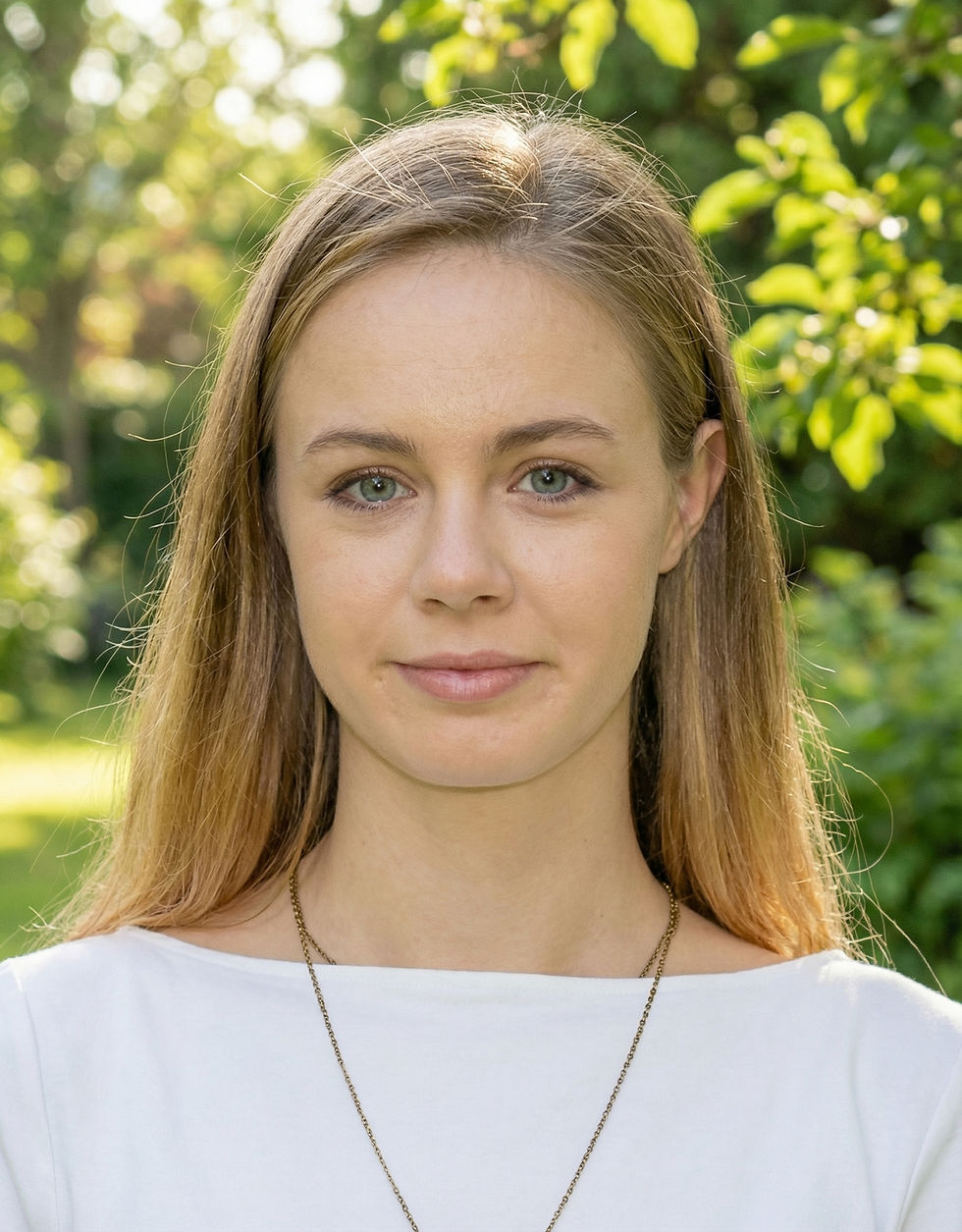
Strahinja is a polymath in the truest sense of the word. In an era of specialization, he refused to choose. A violinist, an award-winning poet, and a national champion in Physics and Math, Strahinja sees no difference between a sonnet and a theorem.
With a resume that includes solving open mathematical conjectures and winning literary awards, Strahinja secured an acceptance to the legendary University of Cambridge, but ultimately chose to pursue his passion for Theoretical Mathematics at Paris-Saclay (Orsay), one of the world's leading institutions for pure math.
Student Snapshot
Target Major: Theoretical Mathematics
The "Spike": Solved an Open Conjecture (Tournament of Towns) + Poetry Awards
Outcome: Accepted to Cambridge; Enrolled at Paris-Saclay (Orsay)
Equedu: Strahinja, your profile is fascinating. You are a violinist and a poet, but you chose Theoretical Mathematics. How do those worlds connect for you?
Strahinja: To me, they are the same thing. I’ve always expressed my creativity through art, but last year, reading about the "Probabilistic Method," I was astonished by the sheer beauty of applying randomness to precise arguments.
I realized that Mathematics requires the same creativity as poetry. It allows for proofs based on a variety of ideas—connecting Graph Theory to Number Theory in ways that seem impossible at first. That "flexibility" is what intrigues me. I realized no other field would suit me more than Pure Mathematics because it is, at its core, an art form.
Equedu: You attended the famous Mathematical Grammar School and Petnica Science Center. Can you tell us about the research that made your application stand out?
Strahinja: I didn't just want to compete; I wanted to discover.
My most significant experience was at the International Mathematical Tournament of Towns. Along with a few friends, we spent ten days in exhaustion and commitment trying to solve an open problem—a conjecture with no known proof. And we succeeded. We were the only team to do it. That experience confirmed that I wanted to dedicate my life to research. Later, at Petnica, I wrote papers on "Random Graphs," introducing combinatorial ideas to analytical methods.
"We spent ten days in exhaustion and commitment trying to solve an open problem—a conjecture with no known proof. And we succeeded."
Equedu: You achieved a massive milestone by getting accepted to Cambridge, but you are currently studying in France. Can you walk us through that decision?
Strahinja: Cambridge was a dream because of its history—studying under the same roof as Isaac Newton is an incredible thought. Being accepted was a huge validation of my hard work. However, without a full scholarship, Cambridge wasn't feasible. But that didn't stop me. I directed my ambition toward Theoretical Mathematics at Paris-Saclay (Orsay). It was the top of my list for France. Paris-Saclay is a global powerhouse for mathematics (famous for its Fields Medalists), and it focuses heavily on the application of knowledge, which challenges me.
Equedu: You had so many interests—from competing in 9 different subjects to writing novellas. How did Equedu help you focus that into a university application?
Strahinja: When you do everything, it’s hard to show who you really are. I was competing in Biology, Geography, French, Physics, and Math, while also playing the violin and writing poetry. Equedu helped me streamline that chaos. They helped me realize that I didn't need to list every single competition. Instead, we focused on the narrative: The Creative Problem Solver. They helped me craft my Personal Statement to show how my literary side enhances my mathematical research. This guidance was crucial for securing my admission offers, including the one for Theoretical Mathematics at Paris-Saclay.
Equedu: Now that you are in France, how is the adjustment?
Strahinja: It’s a new challenge. I am studying in French, which I had to perfect in my final year of high school. I miss the food back home—though I’m getting used to French cuisine! But academically, I am right where I need to be. The focus on theory in Belgrade combined with the practical application in Paris gives me a complete perspective on mathematics.
Strahinja turned his diverse talents into offers from the world's best universities. Ready to write your own success story? Contact our team.


Comments